How to choose flooring for each room
By the GlowUpp team · 27 October 2026
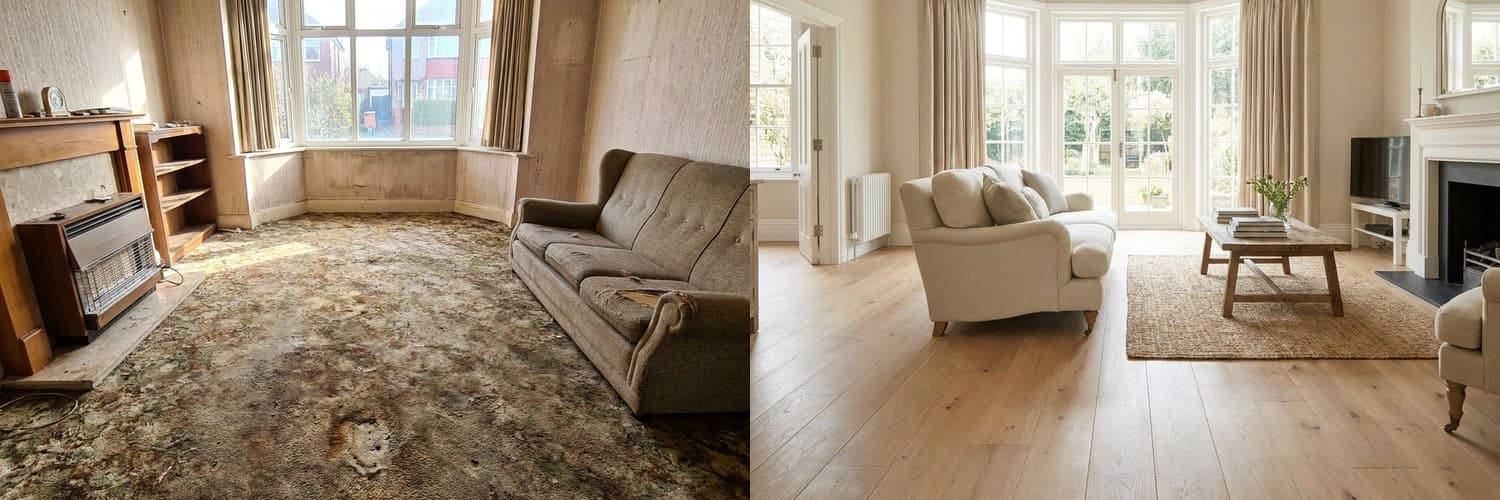 BeforeAfter‹›
An AI-generated example. Real results depend on your own space.
The best floor is the one that suits how a room is used. A beautiful floor that stains, scratches or feels cold underfoot will bother you every day.
Ask three questions first
- How much wear will it get: feet, pets, children, furniture, outdoor shoes?
- Will it get wet or damp?
- What is under it: concrete, boards, underfloor heating? The base affects what you can fit.
Kitchens
You want something hard-wearing and easy to wipe, such as tile, vinyl or a water-resistant product designed for kitchens. Solid timber is lovely but can be damaged by spills and needs care.
Bathrooms and utility rooms
Choose a floor made for wet rooms: tile, good-quality vinyl or a product that is rated for bathrooms. Grip underfoot matters, and the floor must be properly waterproofed and sealed.
Living rooms and hallways
Hallways take the most wear, so choose a tough surface. In living rooms, wood, engineered wood, laminate or carpet all work, depending on whether you want warmth, sound absorption or a particular look.
Bedrooms
Carpet is warm and quiet. Wood and similar floors look clean, and you can add rugs for comfort. Think about noise if you live in a flat or have neighbours below.
Comparing the main options
- Carpet: warm and soft, but shows stains and traps dust.
- Laminate: practical and varied in look; check how it handles moisture.
- Engineered wood: real wood surface, more stable than solid timber.
- Solid wood: can be sanded and refinished but moves with humidity.
- Vinyl or luxury vinyl tile: waterproof options, good for kitchens and bathrooms.
- Tile: very durable but hard and cold without underfloor heating.
Check the details before you order
Ask the supplier whether the product suits your subfloor and underfloor heating if you have it, who will prepare the base and how the floor will be finished at doorways. Ask for samples and look at them in your own light.
Mistakes to avoid
- Using a floor in a room it was not designed for.
- Ordering before the subfloor has been checked.
- Forgetting how the flooring meets the next room.
See it in your room
Upload a photo of your room to GlowUpp to see AI-generated flooring ideas, then test real samples before you buy. Always ask a qualified professional before moving gas, electrics or plumbing, or changing anything structural, and check your lease or local rules if you rent or live in a conservation area.
See your own flooring redesigned
Upload a photo and see AI-generated ideas in about two minutes. Free for homeowners, no sign-up needed to start.
Try it with your photoCommon questions
- What is the best flooring for a kitchen?
- A hard-wearing, wipeable floor such as tile, vinyl or a water-resistant product designed for kitchens. Check that it suits your subfloor.
- Can I put wood in a bathroom?
- Generally not unless the product is specifically made and rated for it. Moisture can damage most wood floors, so choose a wet-room-suitable floor.
- Does underfloor heating affect my choice?
- Yes. Not every floor is suitable, so check with the manufacturer and your installer before you order.