How to prepare walls for painting: the steps that make the finish last
By the GlowUpp team · 27 October 2026
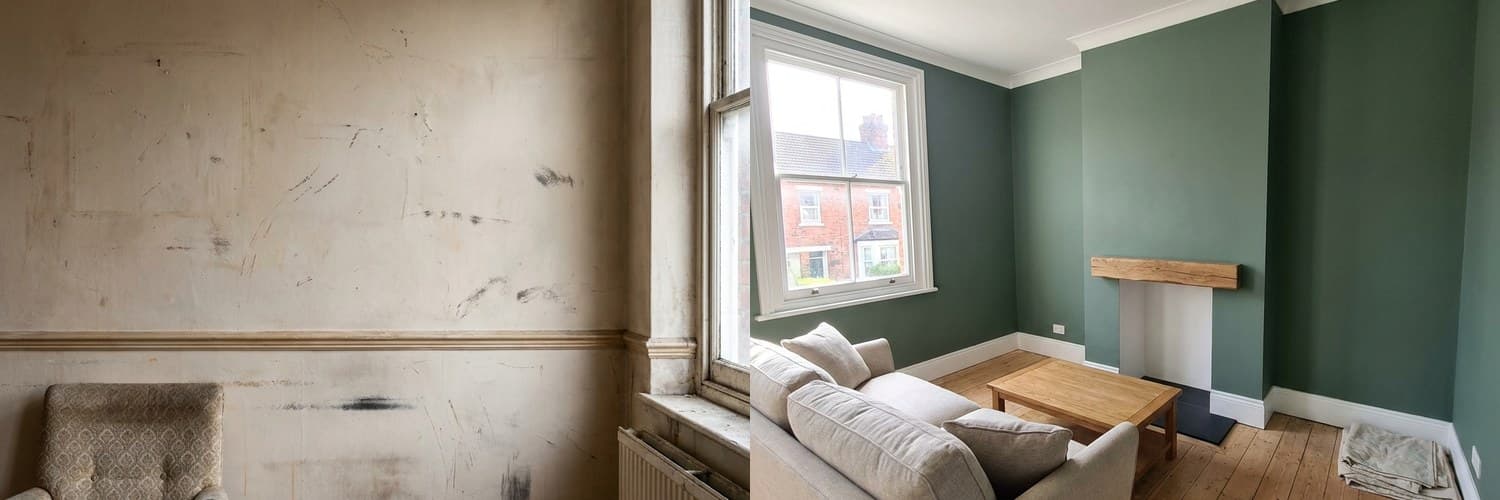 BeforeAfter‹›
An AI-generated example. Real results depend on your own space.
Good paint on poorly prepared walls looks poor. Most of the work in a good paint job is done before the first coat goes on.
1. Clear and protect
Move furniture away or cover it. Lay dust sheets, remove switch plates and mask edges.
2. Check for problems
- Damp or mould: find and fix the cause before painting. Paint will not cure it.
- Flaking or bubbling paint: scrape back to a firm surface.
- Cracks and holes: fill them.
- Staining from smoke or water: seal with a suitable stain-blocking primer.
3. Fill and sand
Fill holes and cracks with suitable filler, let it dry, then sand smooth. Wipe away the dust.
A note on old paint
Houses built before the 1980s may have old lead-based paint. Do not dry-sand or scrape it. If you suspect it, get advice before disturbing it.
4. Clean the walls
Wash with sugar soap or a mild cleaner to remove grease and dirt, then let the wall dry fully.
5. Prime where needed
New plaster, filled patches, stains and strong colour changes need primer. Use the product recommended for the surface.
6. Paint in good conditions
Paint when the room is dry and not too cold. Cut in edges first, then roll, and keep a wet edge to avoid marks.
Mistakes to avoid
- Painting over damp or mould.
- Skipping cleaning and sanding.
- Rushing the drying times.
See the colour first
Upload a photo of your room to GlowUpp to see AI-generated colour ideas, then test real samples. Always ask a qualified professional before moving gas, electrics or plumbing, or changing anything structural, and check your lease or local rules if you rent or live in a conservation area.
See your own painting redesigned
Upload a photo and see AI-generated ideas in about two minutes. Free for homeowners, no sign-up needed to start.
Try it with your photoCommon questions
- Do I need to sand walls before painting?
- Usually a light sand over filled areas and glossy surfaces helps paint stick. Wipe away the dust afterwards.
- Can I paint over mould?
- No. Find and fix the cause, clean it off properly and treat the area before painting. Ask a professional if it keeps coming back.
- Do I need primer?
- On new plaster, repairs, stains and big colour changes, yes. Ask your paint supplier which primer suits your wall.