How to set a realistic renovation budget (and why you need a contingency)
By the GlowUpp team · 27 October 2026
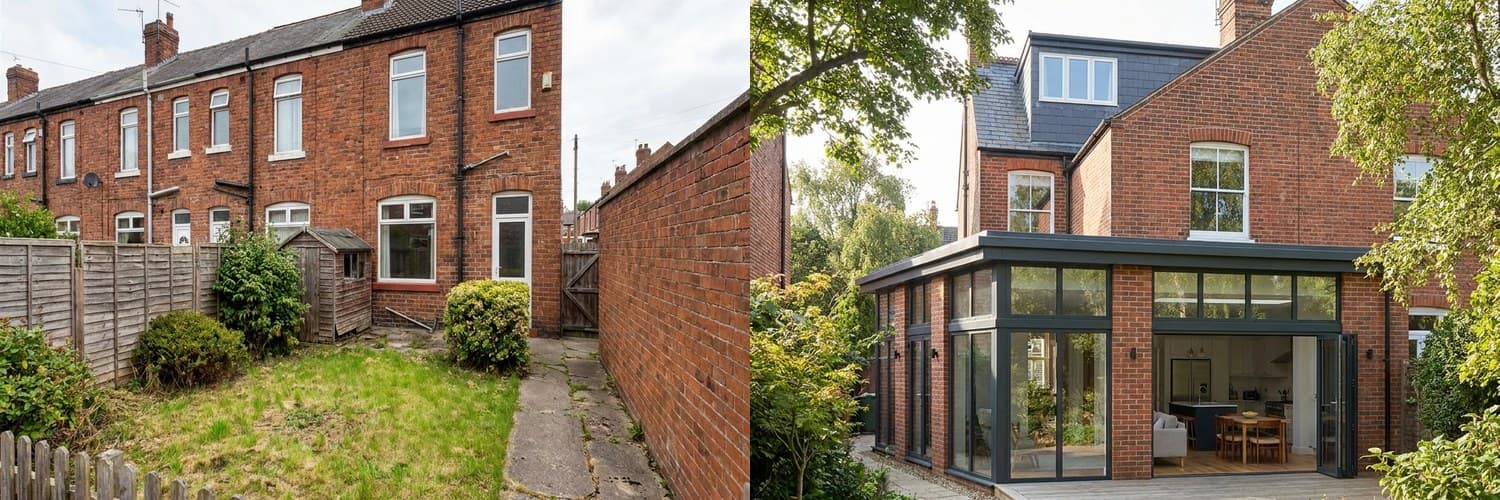 BeforeAfter‹›
An AI-generated example. Real results depend on your own space.
Most renovations that go over budget do so for the same reasons: the plan was vague, some costs were forgotten and nothing was held back for surprises. A little work at the start makes the number much easier to hold.
Start with what you want, in order
Write a list of everything you would like to do and sort it into three groups: must do, should do and nice to have. If the money runs short, you will cut from the bottom, not from the things that matter.
Get real quotes before you fix the number
Online guides can tell you what is possible, but only quotes for your own house tell you what it will cost. Get itemised quotes for the work, and treat any figure from a conversation or a website as a rough guide until it is in writing.
Remember the costs that are easy to forget
- VAT, if the quotes do not include it.
- Design, survey or building-control fees, and any permissions you need.
- Skip hire, waste removal and protecting floors and furniture.
- Decorating and making good after other trades have finished.
- Furniture, lighting, curtains and appliances.
- Somewhere to live or cook if the work makes the house hard to use.
Hold back a contingency
Older houses hide problems behind walls and under floors, and projects change as you go. Many people set aside around 10 to 20% of the budget for the unexpected, and more for an older house or a larger structural job. Keep it separate and do not spend it on upgrades at the start.
Agree how you will pay
Ask for payments that follow the stages of the work, so you are never far ahead of what has been done. Put it in writing, and keep a simple record of what you have agreed, paid and still owe.
Track it as you go
A simple spreadsheet with the quote, extras agreed and payments made keeps surprises small. Ask for any change in price to be agreed in writing before the work is done, not afterwards.
Mistakes to avoid
- Fixing a budget before you have any quotes.
- Choosing the cheapest quote without checking what is left out of it.
- Spending the contingency on upgrades in the first week.
- Agreeing extra work by word of mouth.
Picture the result before you price it
Upload a photo of your home to GlowUpp and see AI-generated ideas before you ask for quotes, so you can brief tradespeople clearly. A clear brief makes quotes easier to compare. Always ask a qualified professional before moving gas, electrics or plumbing, or changing anything structural, and check your lease or local rules if you rent or live in a conservation area.
See your own extension redesigned
Upload a photo and see AI-generated ideas in about two minutes. Free for homeowners, no sign-up needed to start.
Try it with your photoCommon questions
- How much contingency should I allow for a renovation?
- Many people hold back around 10 to 20% of the budget, and more for an older property or a larger structural job. The right amount depends on how much is unknown.
- What do people forget to budget for?
- VAT, fees and permissions, skip hire, decorating after the building work, furniture and appliances, and the cost of living with the disruption.
- Should I pay a deposit before the work starts?
- Agree a payment plan in writing that follows the stages of the work, so you never pay far ahead of what has been done. Be cautious about large payments up front.