Patio or decking? Which suits a UK garden
By the GlowUpp team · 27 October 2026
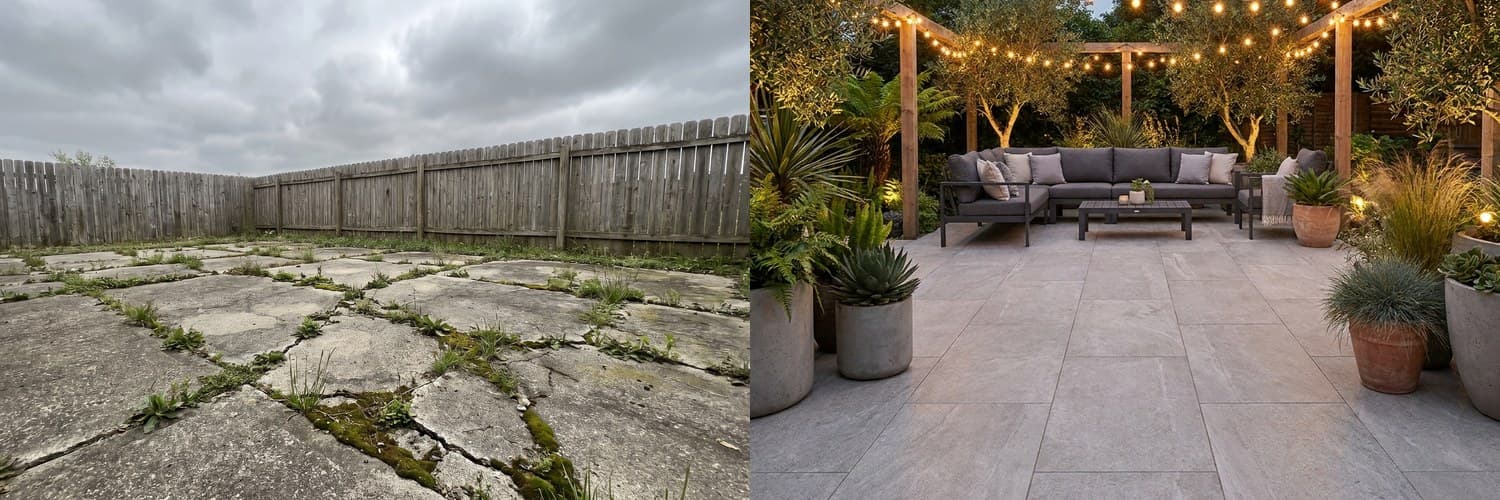 BeforeAfter‹›
An AI-generated example. Real results depend on your own space.
Patio or decking is one of the first questions in any garden project. Neither is always better: the right one depends on your ground, how much upkeep you want and how you use the space.
Patio: solid and long-lasting
Paving slabs and porcelain tiles on a proper base are very durable and suit level ground. They give a firm, even surface for furniture and are easy to sweep. Stone can get slippery when it grows algae in a shady, damp garden, so clean it and consider a textured finish.
Decking: warm and good on slopes
Decking is raised on a frame, so it can level out a sloping garden and hide uneven ground. Timber looks and feels natural but needs regular treatment to last. Composite boards need less upkeep, but can get hot in strong sun and cost more at the start. Choose boards with a grooved or textured face for better grip when wet.
How they compare
- Upkeep: porcelain patios need the least, composite decking is low, timber decking needs the most.
- Slopes: decking copes with them more easily, patios need the ground levelled first.
- Grip: both can be slippery when wet and shady, so choose textured surfaces.
- Look: patios feel solid and formal, decking feels softer and more relaxed.
Drainage and levels matter more than the material
Whichever you choose, the surface should slope slightly away from the house so water drains away, and it should usually sit at least 15 cm below the damp-proof course so that rain does not reach the wall. A good base and sound drainage are what stop patios sinking and decks rotting.
Check the rules for raised decking
A raised deck is treated differently from a patio. In England, decking more than 30 cm above the ground usually needs planning permission, and a deck that overlooks neighbours can cause arguments even where it is allowed. Ask your local council if you are unsure.
Why not both?
Many gardens work best with a mix: a paved area by the house for the table and chairs, and a decked area further back or at a different level for lounging. A mix also lets you use each material where it does best.
Mistakes to avoid
- Skipping the base: a thin base is the main reason patios settle and crack.
- Choosing dark composite for an area in full summer sun without thinking about heat.
- Forgetting drainage or the damp-proof course level.
- Ordering materials before measuring the space and the furniture.
See your garden finished first
Upload a photo of your garden to GlowUpp and see AI-generated versions with a patio, decking or a mix of both, then share the one you like with a local landscaper for a quote. Always ask a qualified professional before moving gas, electrics or plumbing, or changing anything structural, and check your lease or local rules if you rent or live in a conservation area.
See your own patio redesigned
Upload a photo and see AI-generated ideas in about two minutes. Free for homeowners, no sign-up needed to start.
Try it with your photoCommon questions
- Is decking or a patio better for a small garden?
- Both work. A patio is simpler and lasts longer on level ground, while decking helps if the garden slopes. Choose a light colour and a simple shape to make a small space feel bigger.
- Do I need planning permission for decking?
- In England, decking more than 30 cm above the ground usually needs planning permission. Check with your local council before you build.
- Which needs less maintenance, a patio or decking?
- A porcelain or stone patio usually needs the least upkeep, followed by composite decking. Timber decking needs the most regular treatment.