How to live at home during building work
By the GlowUpp team · 27 October 2026
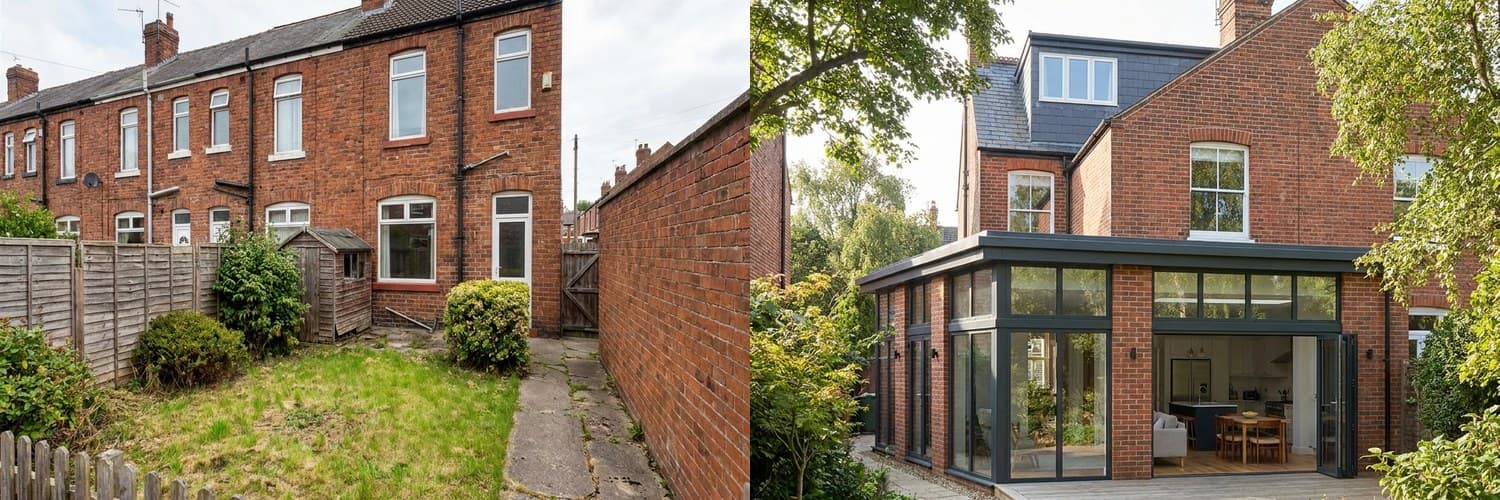 BeforeAfter‹›
An AI-generated example. Real results depend on your own space.
Many people stay at home during renovation work to save money and keep an eye on the job. It is doable with some planning and a sense of humour.
Agree the practical details before work starts
- Working hours and which days they will be on site.
- Which rooms and which toilet the team will use.
- Where materials, tools and the skip will go.
- How the site will be locked and made safe at night.
- Who you can ring if there is a problem, and who is in charge on the day.
Plan for dust
Ask for dust sheets and closed doors between the work area and the rest of the house. Cover furniture you cannot move, and expect to clean more often than usual.
Set up a temporary kitchen
If the kitchen is out of action, move a kettle, microwave, fridge and a few plates and pans to another room. Plan simple meals and be realistic about takeaways. Washing up in the bathroom basin gets old quickly.
Keep water, heating and power in mind
Ask when the water, power or heating will be off and for how long, so you are not caught out in winter or with a young family.
Security, children and pets
- Make sure doors and windows can be locked when the work is open to the outside.
- Keep children and pets away from tools, materials and open areas.
- Put valuables and papers away.
Keep a good relationship with the team
Give a short daily check-in rather than ongoing interruptions, offer somewhere to leave kit overnight and keep requests for changes in writing. Good communication prevents most arguments.
Decide when it is worth moving out
For major work, such as a full rewire, no heating in winter or a whole-house project, a short stay with family or a rental may be easier and quicker for everyone. Discuss it with your contractor.
Plan the work first
See what you want with a GlowUpp redesign, then ask tradespeople how they would run the job around your home. Always ask a qualified professional before moving gas, electrics or plumbing, or changing anything structural, and check your lease or local rules if you rent or live in a conservation area.
See your own extension redesigned
Upload a photo and see AI-generated ideas in about two minutes. Free for homeowners, no sign-up needed to start.
Try it with your photoCommon questions
- Can I live in the house during an extension?
- Often yes, if the existing rooms stay usable and the work area can be separated. Discuss dust, water, power and security with your builder.
- How do I cope without a kitchen?
- Set up a temporary kitchen with a kettle, microwave and fridge in another room, and plan simple meals.
- What should I agree with the builder before starting?
- Working hours, access, toilet use, where materials go, security and who to call if there is a problem.