How to plan a garden layout from scratch
By the GlowUpp team · 27 October 2026
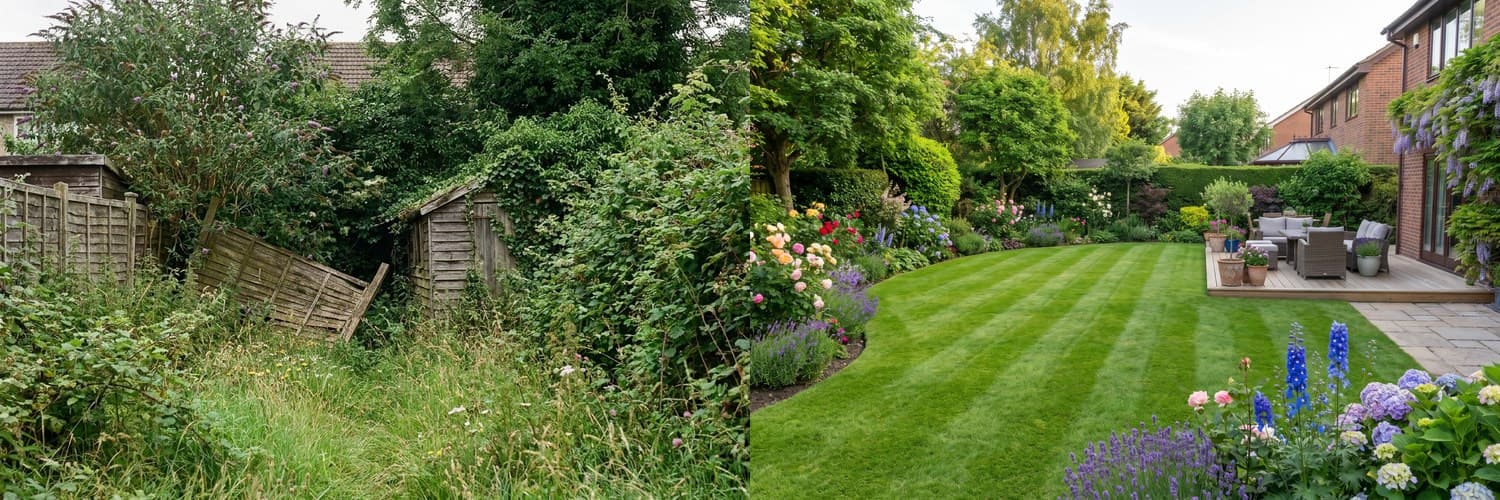 BeforeAfter‹›
An AI-generated example. Real results depend on your own space.
Most gardens that disappoint were never planned: things were added one at a time with no overall idea. An hour with a pencil and paper first makes the whole space work together.
1. Measure and draw it
Measure the boundaries and mark fixed features such as the house, doors, windows, drains, manholes, trees, sheds and steps. Draw a rough plan to scale on squared paper.
2. Note sun, shade and wind
Watch where the sun falls at different times of day, and which parts stay shady or damp. This decides where to put a seating area, a vegetable bed or plants that need light.
3. Decide how you want to use it
- Eating and relaxing: a seating area with some privacy.
- Children and pets: lawn or soft surfaces and safe boundaries.
- Growing: raised beds or borders in the sunniest spots.
- Storage: somewhere for bins, bikes and tools, out of sight.
4. Plan zones and paths
Divide the garden into zones and connect them with paths that follow the way you naturally walk. Curves and angles can make a small garden feel bigger than a plain rectangle.
5. Think about drainage
Water should run away from the house and not collect in the middle of the lawn or against walls. Poor drainage is much easier to deal with before you lay anything.
6. Plant in layers
Put tall plants at the back or edges, medium ones in the middle and low ones at the front. Choose plants that suit your soil and light, and some with interest across the seasons.
7. Add lighting and boundaries last
Outdoor lighting and fencing or screening make a difference to how you use the space after dark. Outdoor electrics should be fitted by a qualified electrician.
Mistakes to avoid
- Buying plants or furniture before you have a plan.
- Making the paths too narrow.
- Putting seating in the shadiest spot.
- Forgetting where bins and storage will go.
Picture it first
Upload a photo of your garden to GlowUpp to see AI-generated ideas for layout and planting before you dig. Always ask a qualified professional before moving gas, electrics or plumbing, or changing anything structural, and check your lease or local rules if you rent or live in a conservation area.
See your own garden redesigned
Upload a photo and see AI-generated ideas in about two minutes. Free for homeowners, no sign-up needed to start.
Try it with your photoCommon questions
- Where should I start when planning a garden?
- Measure it, mark fixed features and note where the sun falls. Then decide how you want to use each part.
- How do I make a small garden feel bigger?
- Use curved or diagonal paths, plant in layers, add vertical planting and keep the colours and materials simple.
- Should I plan drainage?
- Yes. Make sure surface water runs away from the house and does not collect in one place, and sort any problems before laying paths or patios.