Kids' bedroom ideas that grow with your child
By the GlowUpp team · 27 October 2026
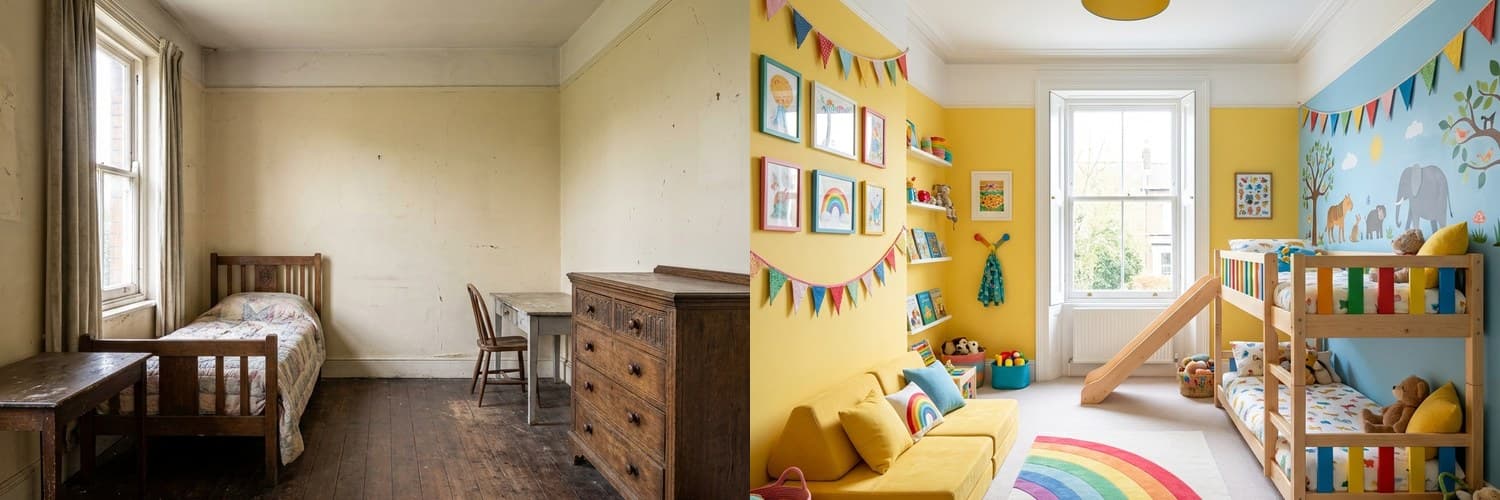 BeforeAfter‹›
An AI-generated example. Real results depend on your own space.
Children grow fast and change their minds even faster. A bedroom that works for years has a calm, simple base, and puts the personality into things that are cheap and easy to swap.
Keep the base simple
Walls, floor and the biggest furniture are the expensive, disruptive things to change, so keep them calm and flexible: a soft colour on the walls, a floor that takes a beating, and furniture in plain, durable finishes. The themes children love this year can then be added with bedding, posters, lamps and a single accent wall.
Choose paint that survives childhood
Pick a washable finish so marks wipe off, and look for a paint with low odour so the room is comfortable to sleep in soon after decorating. Check the tin for how long to leave the room ventilated before a child sleeps there.
Furniture that lasts
- A good bed in a standard size lasts longer than a novelty one. Beds with drawers underneath add storage without taking floor space.
- A desk by the window gives homework somewhere to happen later, and a play table in the same place for now.
- Adjustable shelves and an open wardrobe layout let you change what goes where as needs change.
Storage at their level
A room tidies itself much more easily when the child can reach the storage. Use low shelves, open boxes and baskets for toys and clothes, and keep a high shelf for the things you want to keep out of reach. A simple system you can keep up beats an elaborate one you will not.
Zones: sleep, play and study
Even a small room works better when it has clear areas. Keep the bed away from the noisy, bright part of the room, give play space a rug and give study a desk with good light. As your child gets older, the play area can become a reading corner or a place for friends.
Safety points to check
- Blind and curtain cords are a strangulation risk. Choose cordless blinds, or fix cords well out of reach of cots and beds.
- Fix tall furniture such as wardrobes and bookcases to the wall so it cannot tip over.
- Bunk beds are usually advised against for children under six. Check the guidance on the bed you are considering.
- Upstairs windows should have restrictors that limit how far they open.
Mistakes to avoid
- Painting the whole room in a strong character theme that you will have to redo in two years.
- Buying furniture sized only for a toddler.
- Putting the toy storage where the child cannot reach it.
- Leaving cords or tall furniture unsecured.
Try ideas on the real room
Upload a photo of the room to GlowUpp and see AI-generated versions with different colours and layouts, then share your favourite with a local decorator or fitter for a quote. Always ask a qualified professional before moving gas, electrics or plumbing, or changing anything structural, and check your lease or local rules if you rent or live in a conservation area.
See your own kids' room redesigned
Upload a photo and see AI-generated ideas in about two minutes. Free for homeowners, no sign-up needed to start.
Try it with your photoCommon questions
- What colour is best for a child's bedroom?
- Soft, calm colours such as light blue, sage or warm neutrals work well for sleep and age well. Add stronger colours in bedding, art and accessories that are easy to change.
- How do I make a kids' room last for years?
- Keep walls, floor and large furniture simple and neutral, and put the personality into items that are cheap and quick to swap, such as bedding, posters and lamps.
- At what age can a child use a bunk bed?
- Bunk beds are usually advised against for children under six. Check the manufacturer's guidance and the safety information for the bed you are considering.